

The United States will need years to replenish ammunition expended during the conflict with Iran, reports the Economist
The price that the US and Israel will pay for the reckless and illegal war they launched against Iran on February 28 is growing larger day by day. In fact, the Economist highlights the fact that the US military has been set back 10 years due to the massive quantity of ammunition it dropped in the Middle East, at a time when the financial cost for Washington is becoming literally unbearable.
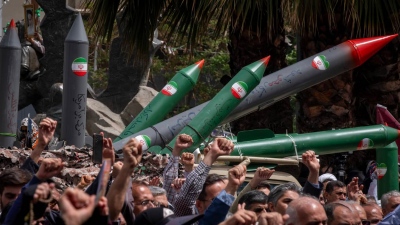
The United States will need years to replenish the ammunition consumed during the conflict with Iran, according to the Economist magazine, citing an analysis by experts at the Payne Institute for Public Policy in Colorado. According to the report, the US used more than 5,000 munitions in the first four days of fighting and approximately 11,000 within 16 days, making the operation one of the most intensive in modern history. More than 1,000 expensive long-range precision missiles, as well as over 300 Tomahawk cruise missiles, were used in the opening days.
US expended 290 air defense systems and 26 billion in one week
Significant resources were also allocated to air defense. During the first week, the US deployed approximately 140 Patriot interceptors and over 150 Terminal High Altitude Area Defense (THAAD) missile defense systems. However, as the magazine notes, the stockpiles of such weapons were limited from the start.
The replenishment of all ammunition will take years—potentially even a decade, as the publication emphasizes. According to experts, the cost of replacing the ammunition spent in the first days of the conflict alone could reach 20-26 billion dollars, while limited production capacity and component shortages remain key challenges.
Massive pressure on the US Navy
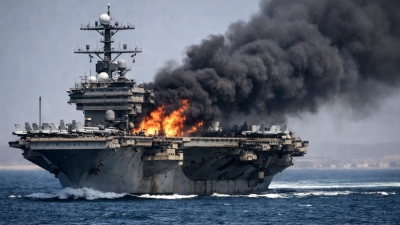
Additionally, the US Navy is facing supplemental pressure. Several aircraft carriers are participating in the operation, and their deployment times are reaching record levels, increasing equipment wear and reducing the readiness of the forces.
Experts warn that such losses could weaken US military potential for the years to come.
Trump in a deadlock, unable to defeat Iran, turns to energy destruction
Meanwhile, the conflict in the Middle East is reaching a new level: Donald Trump threatened Iran with a strike on the country's largest gas field, South Pars, in response to the destruction of Qatar's LNG infrastructure. Discussions regarding energy risks and a new phase of escalation are already circulating in the region. It is of particular interest to highlight the reactions of the involved parties, as well as comments from Russia.
Repeated energy reprisals from both camps
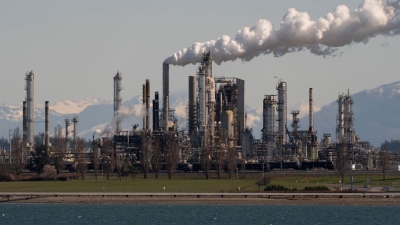
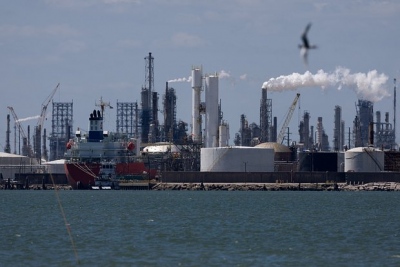
On March 18, the Israeli Air Force attacked Iranian oil and gas installations, the Tasnim news agency reported. Tehran announced that it is preparing a harsh retaliatory strike. Energy infrastructure in Saudi Arabia, the UAE, and Qatar were named as potential targets—Iran now considers them "legitimate targets."
Later, it was reported that Iranian forces attacked the Qatari oil company Qatar Energy, hitting its facility in Ras Laffan, home to the LNG plant. Following this, Donald Trump stated he was ready to strike South Pars in the event of a Tehran attack on Qatar.
"Israel acted unilaterally in destroying the South Pars field"
"No more attacks will be carried out by Israel on this extremely important and valuable field, South Pars, unless Iran makes the foolish decision to attack a very innocent place—in this case, Qatar," the American President threatened on the social network Truth Social. Donald Trump emphasized that Washington is ready to take unprecedented measures if Qatar's energy infrastructure is attacked again. "I do not want to allow [...] destruction of such scale because of the long-term difficulties it will create for Iran in the future, but if Qatar's LNG facilities are attacked again, I will do it without a doubt," he assured. The American leader also noted that the United States was unaware of the plans of Israel to strike South Pars and argued that Qatar had nothing to do with these events. He also expressed hope that further attacks on energy installations would be avoided.
Kremlin: Uncontrolled strikes on energy infrastructure a turning point in the war
The harsh statements by Donald Trump and the strikes on Iran's energy infrastructure caused reactions both in Russia and across global markets in general. Kirill Dmitriev, head of the Russian Direct Investment Fund (RDIF) and special envoy of Russian President Vladimir Putin, characterized the events as a turning point.
"Turning point," he wrote on the social network X, commenting on Donald Trump's words about a potential strike on the South Pars field. Kirill Dmitriev also commented on the fire at the LNG complex in Ras Laffan, Qatar, noting the consequences for the global economy: "It is bad for the world, catastrophic for the EU," he stressed.
Uncontrolled... fire in the global energy market
Energy markets also reacted to the escalation of the situation. According to Bloomberg, the price of liquefied natural gas futures in Europe rose by 35% following the attack on Qatar Energy's facilities in Qatar. The agency noted that, given the high demand for LNG in Europe and competition from Asia, the situation could lead to supply shortages and prolonged disruptions in the global market. The war in Iran is reaching a new level amid attacks on key energy infrastructure in the region, the Wall Street Journal noted. "The escalation of attacks on oil and gas infrastructure in the Persian Gulf is pushing the US-Israeli war with Iran into a new dangerous phase, threatening to worsen the crisis in the global energy supply," the article's authors underlined.
www.bankingnews.gr





Σχόλια αναγνωστών